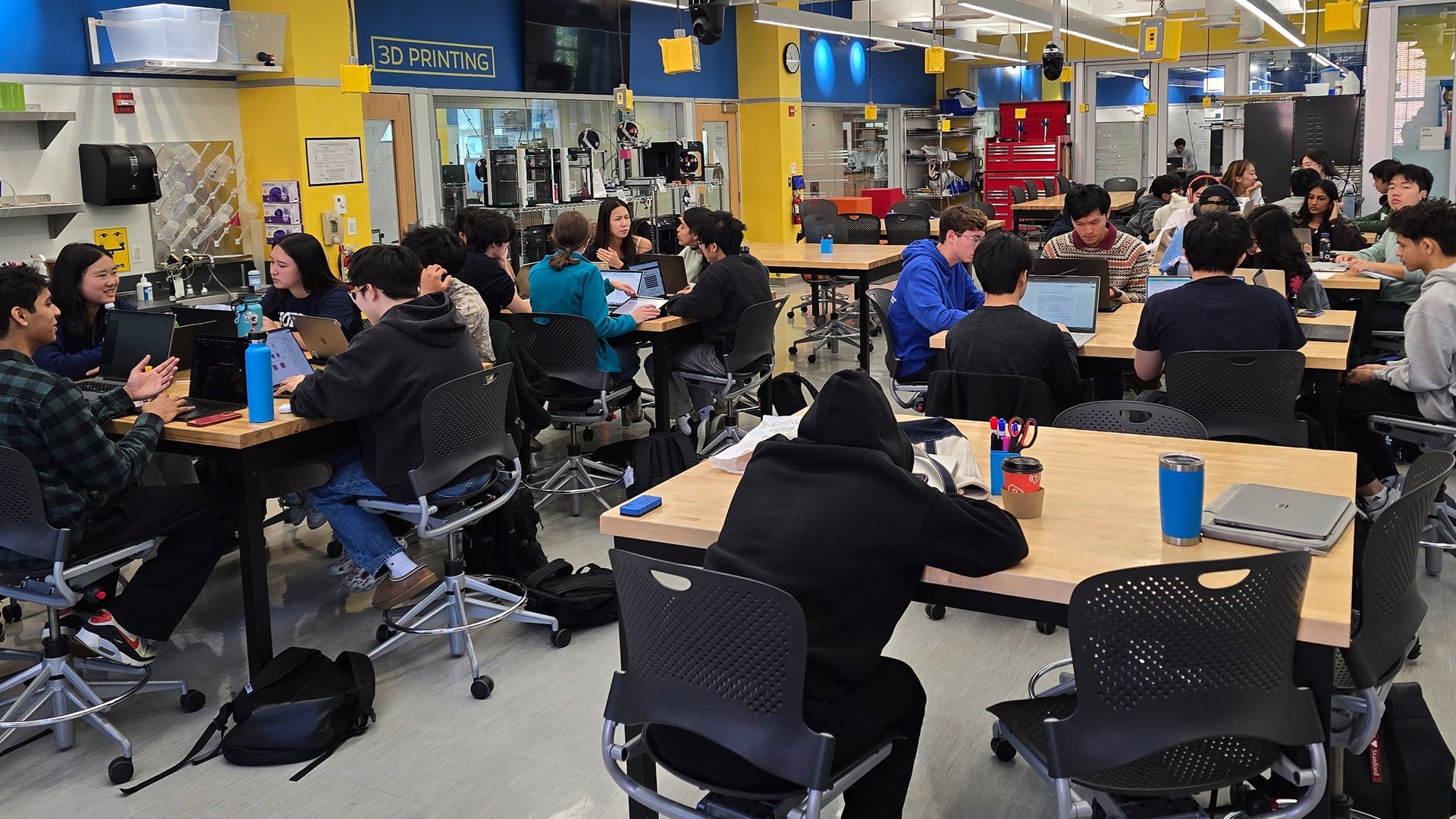
The Design Studio has a full scope of equipment and resources available for students to design, build, and test their projects. Some resources are available for general use, while others require special training and supervision. Below you will find training manuals and quizzes for the Design Studio equipment.
Access the myLearning Laboratory Safety course by logging into MyJH.
Training Protocol
- Download and read the equipment manuals, which can be found below.
- Come to the Design Studio during a TA shift (see schedules) to be administered a quiz on the equipment’s manual.
- Get hands-on training from the TA.
- Produce a sample approved by the TA who trained you.
BambuLabs P1S with Multi-Material Unit, P1p, and A1
The Bambulabs machines are powerful, fast, and reliable FDM printers. They are able to print a variety of materials, including PLA, ABS, and PETG. The P1S is equipped with the AMS multi material unit, and can print up to four materials in a single print.
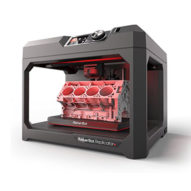
Makerbot Replicator +
This FDM style printer is great for a first pass on prototyping parts with complex shapes. It is ideal for “looks-like” prototypes and low-load “works-like” prototypes. This printer prints only in PLA. Students must be trained prior to use.
Please complete the Makerbot Replicator+ quiz prior to scheduling training.
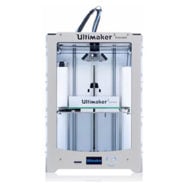
Ultimaker
This FDM style printer is great for a first pass on prototyping parts with complex shapes. It is ideal for looks-like prototypes and low-load works-like prototypes. This printer prints only in PLA. Students must be trained prior to use.
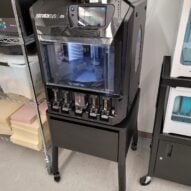
Stratasys J35
The J35 is an engineering-grade PolyJet 3d printer. It can print up to three materials at once, including flexible and clear materials, allowing for a wide range of possibilities. It has incredible resolution, printing in 0.0007” layers. It uses a water-soluble support material, so overhangs are no issue.
To use this printer, simply contact Cole (cpritch8@jh.edu) or Tom (tbenass1@jh.edu) with your file, and we will print it for you.
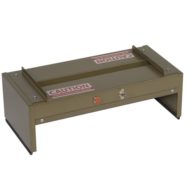
Acrylic Bending & Bonding Equipment
Strip heaters may be used as a complement to the laser cutter to bend acrylics and assemble/finish cut parts. These tools can get very hot and should be handled with care. There is also acrylic bonding agent in the Design Studio East, which can be used for bonding acrylic to acrylic and should only be used under the fume hood.
Electronics Carts
These mobile electronics carts support students in development and testing of electronics in projects and classes.
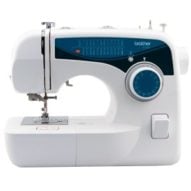
Sewing Machines
A sewing machine is used to bind fabrics and other thin materials, and can be useful for biomedical instrumentation and other prototyping, particularly with wearables.
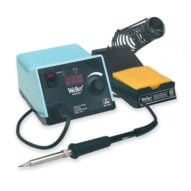
Soldering Station
Among other equipment and supplies, soldering irons, lighting sources, clamps, heat sources, wiring, solder, flux, and insulation are available for student use for projects and classes.
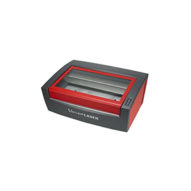
VLS3.50 Laser Cutter
Laser cutters are quick and versatile, and may be useful for all stages of prototyping. The VLS3.50 laser cutter is primarily used for cutting acrylic, however alternative materials can be used with the permission of Design Studio TAs. It has a dimension limit of 12×24. Students must be trained prior to use.
Please complete the Laser Safety Training and send the certificate to a Design Studio TA to schedule a training session.
Other laser cutters are available in the WSE Advanced Manufacturing Lab at the Wyman Park Building, and in the JHU Makerspace in the Pava Center.
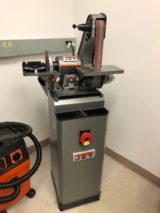
Belt/Disk Sander
This is a fast moving abrasive belt and disk.
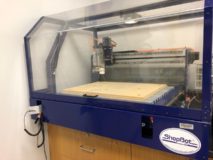
CNC Router
This is a computer controlled router. It moves a fast spinning router bit in three axes to carve away material. You can design 2D or 3D toolpaths for this machine. You can use a variety of materials (wood, soft metals, plastics).
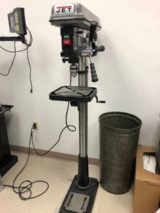
Drill Press
This machine is used to drill vertical holes in material. You can adjust the speed as needed to better drill through a wide range of materials (wood, metal, plastics). The drill press also has a table for easy clamping down of materials while drilling.
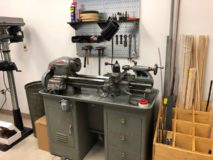
Lathe
The lathe holds round materials (rods, pipes, etc.) and rotates it very quickly. You can use various shaping tools and drill bits to shape the stock into the desired design/dimensions. You must be trained by Tom Benassi or Cole Prichard to use this machine.
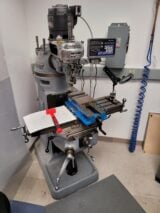
Mill
This machine can be moved in the x, y, and z axes to precisely remove material from a stock piece. This can be used for a wide variety of purposes such as drilling a precise array of holes, flattening surfaces, and complex shaping. You must be trained by Tom Benassi or Cole Prichard to use this machine.
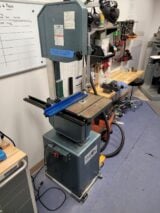
Vertical Bandsaw
The vertical bandsaw can be used for soft metals (aluminum) and wood. The bandsaw can be used for smooth curves as well as right straight cuts.
Horizontal Bandsaw
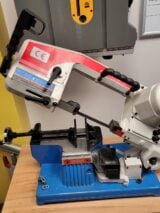
The horizontal bandsaw can cut steel and aluminum at a right angle. You can use it to chop long pieces of round or square stock to smaller lengths.
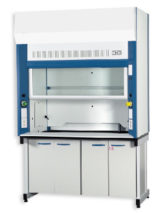
Fume Hood
The fume hood ensures safe practices when working with volatile chemicals that would otherwise be harmful. The fume hood is located in Design Studio East, where any work with volatile chemicals should be done. Please consult a Design Studio TA if you are unsure if a chemical should be used under the fume hood.
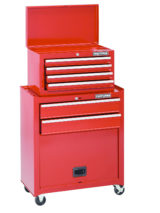
Hand Tools
Two red tool boxes are located just outside the team room in Design Studio West. They have drills, soldering irons, clamps, saws, screws, screwdrivers, rotary tools, springs, pliers, wrenches and more. If you have a tough prototyping problem to solve, check here for ideas. We probably have the answer.
And remember, tools require safe handling. If you are unsure of proper use, don’t hesitate to ask!
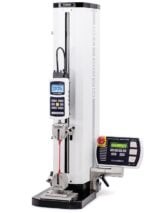
Mark 10 Force Guage
The Mark 10 Force Guage and ESM303 Motorized Test Stand allows you to measure compressive and tensile strength of a variety of materials. The Mark-10 can measure up to 100N of force. Use in concert with the Measur+ software to set up specific material testing protocols, and record comprehensive data from tests and graph results clearly. We have a wide selection of testing hardware to mount samples, and the design studio staff can assist with making custom fixtures if needed.
This equipment requires training to use.