Engineering Living Implants for the Brain
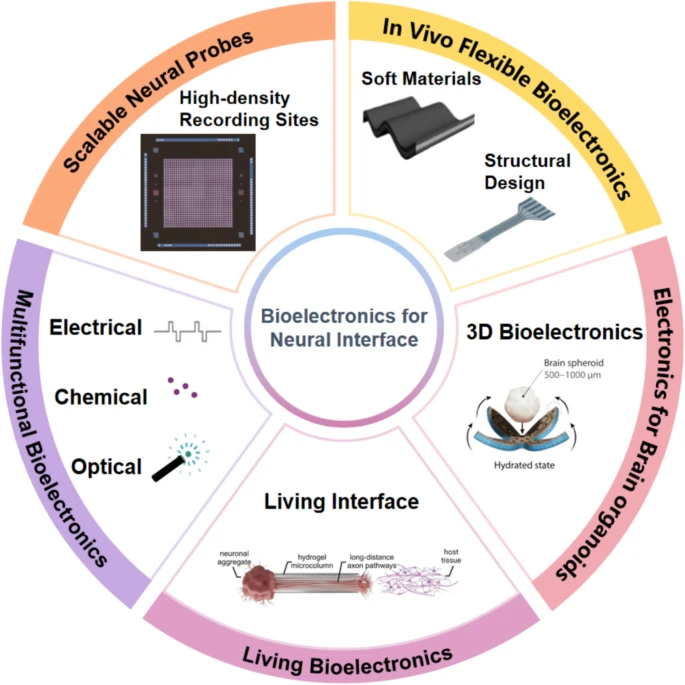
The biggest obstacle to creating reliable, long-term brain-machine implants is the body’s rejection of the stiff, foreign material, which causes the device to fail. In a new perspective paper, Johns Hopkins researcher Xiao Yang and student eliminate this rejection problem. Made of flexible and stretchable electronics that mimic soft brain tissue, these devices are designed to co-evolve and regenerate with the body, enabling the implant to last a long time. By combining this seamless integration with technologies like AI for real-time decoding and organoid intelligence (OI) for hybrid computing, these advanced neurotechnology devices will be far more than passive sensors. They are envisioned as active, living, and learning extensions of the nervous system, promising long-lasting and effective treatments for countless neurological conditions.
MRS Communications | October 2025