For people with Type 1 diabetes, cell transplants could finally end the need for daily insulin injections. But there’s a catch: the body’s immune system quickly attacks foreign cells, forcing patients to rely on powerful immune-suppressing drugs that prevent rejection but carry serious long-term risks.
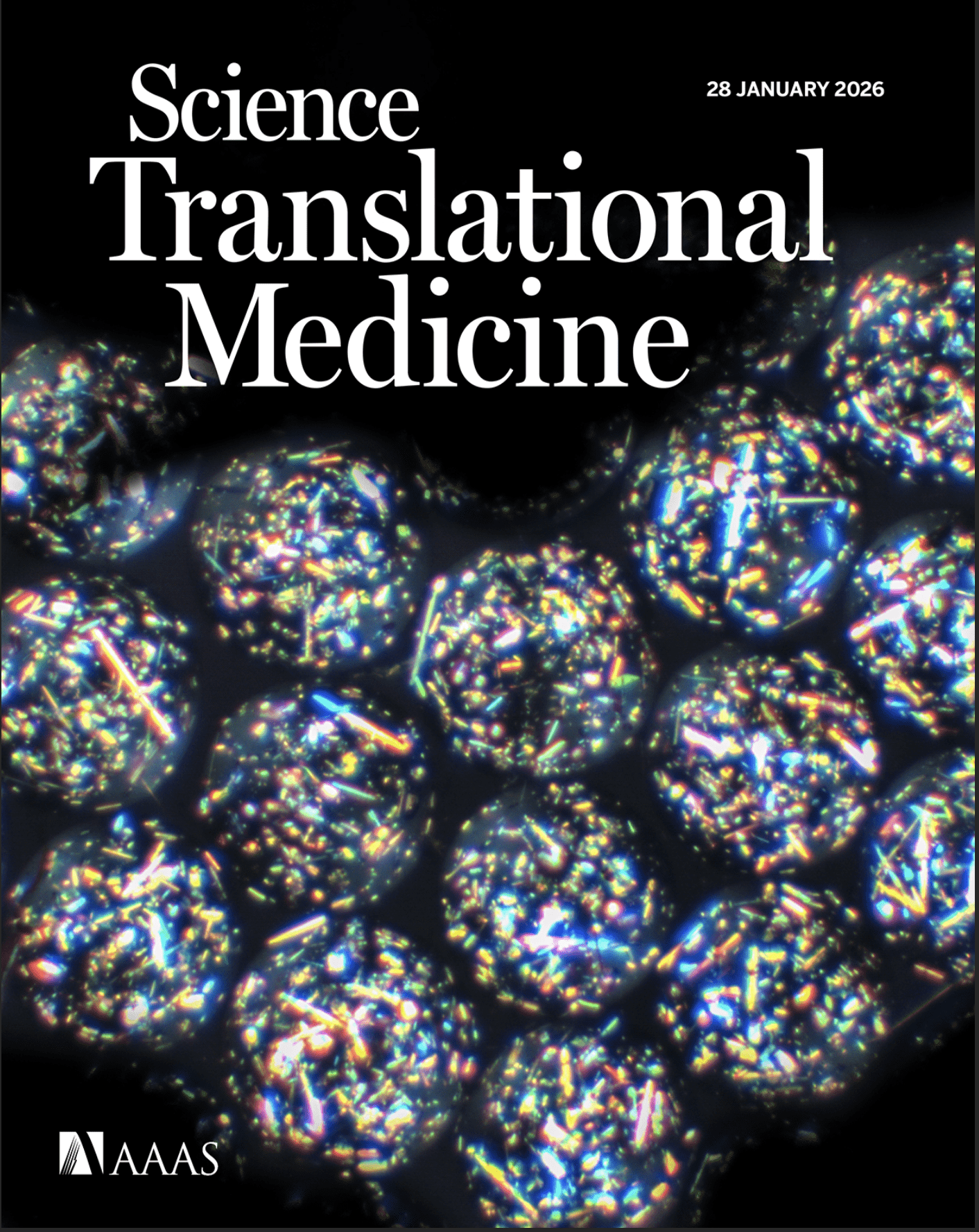
Now, an international team led by researchers at Johns Hopkins University has made a major advance in solving that problem. Featured on the cover of the January 2026 edition of Science Translational Medicine, the study introduces a novel “crystalline shield” that protects cells for up to a year—without shutting down the patient’s entire immune system.
“Ultimately, this discovery moves us closer to a future where chronic diseases might be managed with long-lasting implantable systems rather than lifelong, systemic immune suppression,” said Joshua Doloff, an associate professor of biomedical engineering at Johns Hopkins and study co-author.
For decades, scientists have worked to enclose donor cells in tiny capsules that can be implanted to sense blood sugar and release insulin as needed. While capsules shield cells from direct attack, the immune system quickly pivots, turning its attention to rejecting the capsule material itself.
In previous work, Doloff’s team identified a specific immune regulator called colony-stimulating factor-1 receptor (CSF1R) as the primary driver behind biomaterial “foreign body” rejection. To block this pathway, the team engineered a CSF1R‑blocking drug into compact crystals. Unlike standard liquid drugs that quickly dissipate, these crystals stay in place to provide protection that lasts for months or even years.